Sleeping Dragons
For most people in China, their favorite holiday is Chinese New Year. Not me. Mine is Dragon Boat Festival. The dragons only come out to play once per year. What many don’t know is where the sleeping dragons spend the rest of the year. Dragon Boat Day is on June 20th this year, so I decided to pay a visit to the sleeping dragons to see how they were doing.
Many places in China let their dragons hibernate buried in sand. I’m very lucky. My village has it’s own long, narrow pond which is perfect for dragon boat racing. It’s spanned by 3 bridges. On the back side of the pond, there’s place where the dragons sleep.
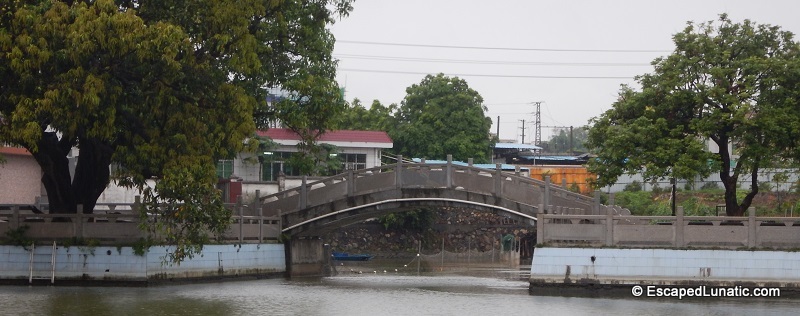
Beyond this bridge are the lairs of the sleeping dragons
In the pondlet behind the 4th bridge, there are a number of long, low buildings. These are the dragon lairs. Some have these holes in the wall.
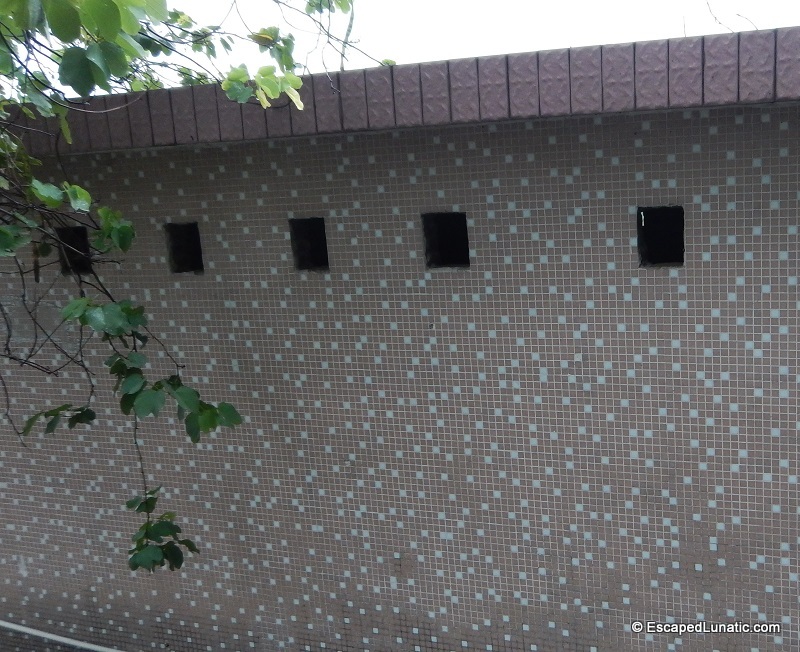
What’s behind the holes?
Of course, only a true Lunatic would shove his arm (and camera) into one of those holes to get a photo. Who knows what could be in there? Hornets? Weasels? Dragons? Happily, I’m crazy enough to try. 
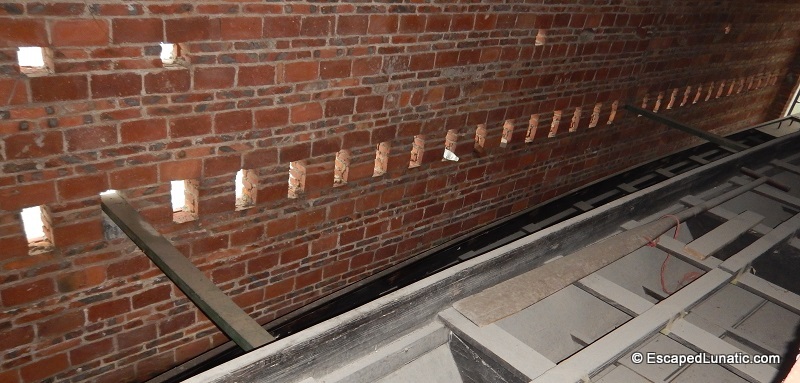
A view through the wall
On one end of each is a door or a gate. On the other end is a very wide gate. Unless the water levels are extremely low, the interior of each building is almost always knee deep in water.
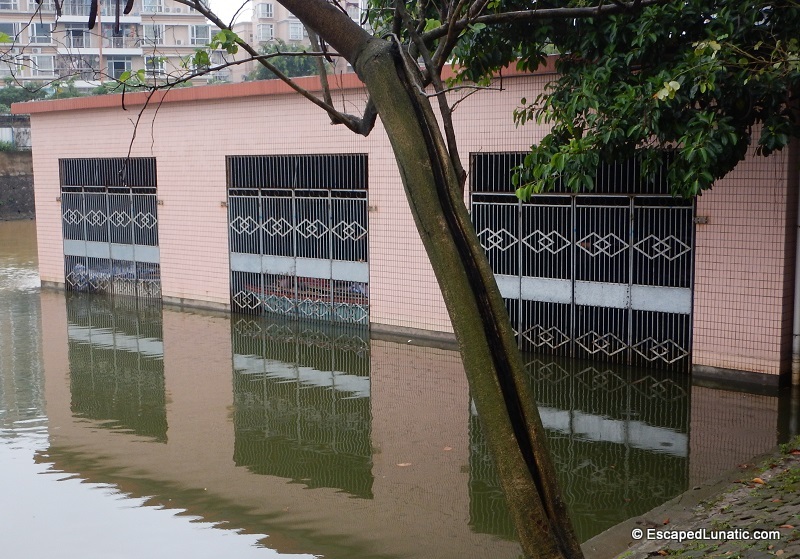
The water gates of some of the dragon lairs
My village’s dragon boats come in 2 sizes. Short boats and long boats. I don’t have as much information about the smaller ones, since I’ve only practiced in a short boat once. Those have a crew of about 20. Because they are much lower in the water, crews of short boats generally end up much wetter than those of long boats. That one time I was in a short boat, I swear the guy in front of me spent the entire practice session trying to see how well he could use his paddle to fling water into my face.
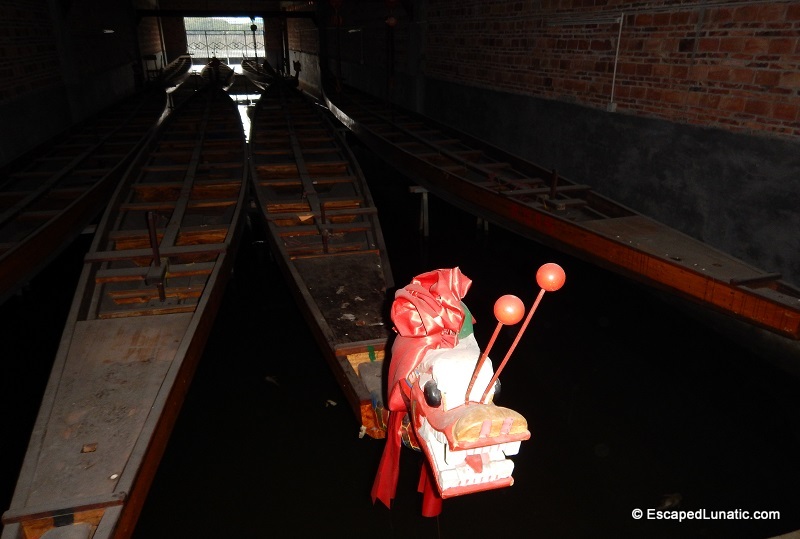
Six short dragon boats dreaming of race day
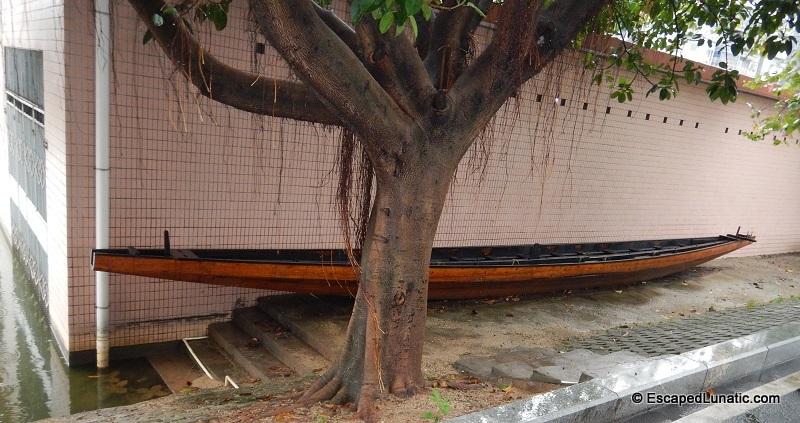
A sleep walking short dragon boat?
The long boats are truly impressive. From nose to tail, they are 30 meters long. A standard crew compliment includes 54 rowers, a captain, one person each on a gong and a drum, and the guy in back on the rudder (who has a lot more influence over the direction the boat goes than the captain). Optimally, the boat, paddles, and crew all sync up into a perfect racing machine. I know of no other team sport with teams this big and requiring all team members to operate in such perfect harmony. Of course, achieving this requires a bit of practice. My favorite spot is in the back row. At that point, the boat is narrow enough that the seats extend out over the water. This leaves me with one foot in the boat and the other in a strap hanging beneath the projecting seat in front of me. My only real worry in this position is getting whacked in the head by the handle of the rudder.
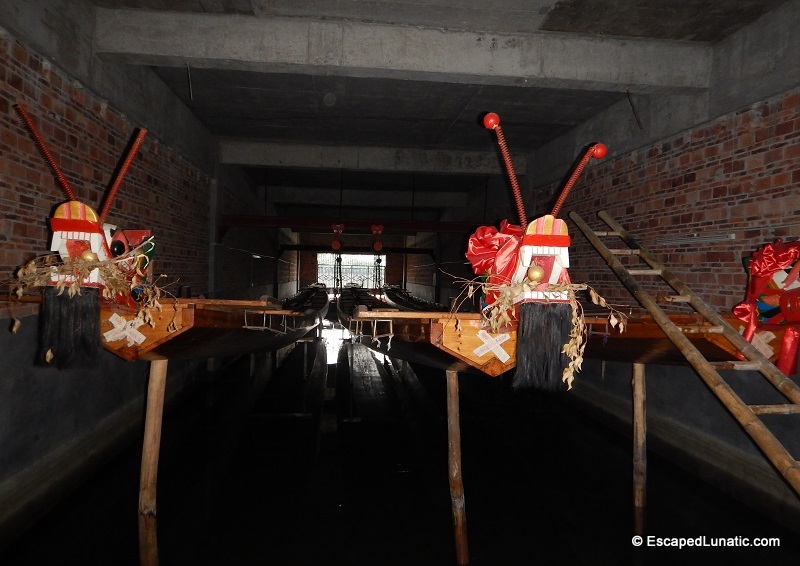
Sleeping Dragons – Three Long Boats
Whenever I can fit it into my schedule, I like to help get my sector’s dragon boats ready and to ride the last one out of its lair. After that, I do whatever it takes to attend each and every practice session.
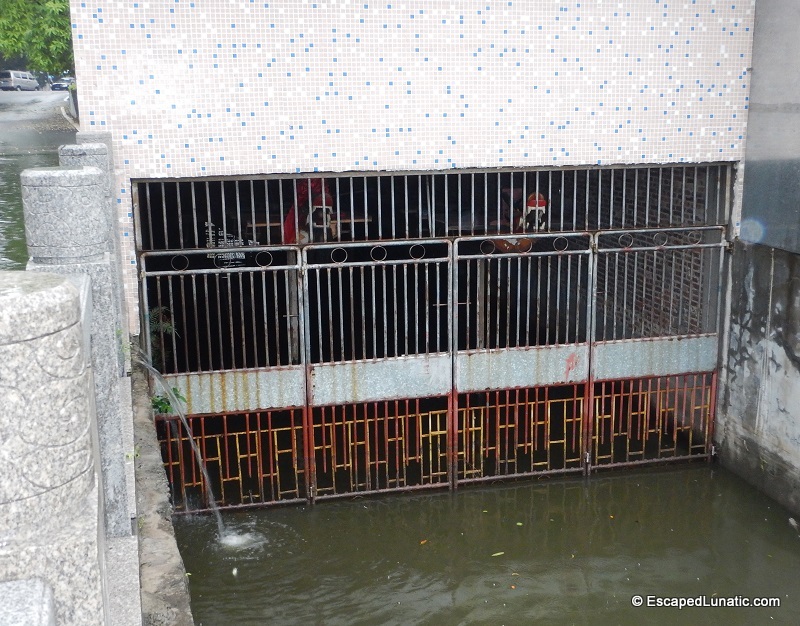
Water gate to the lair for my sector’s dragon boats
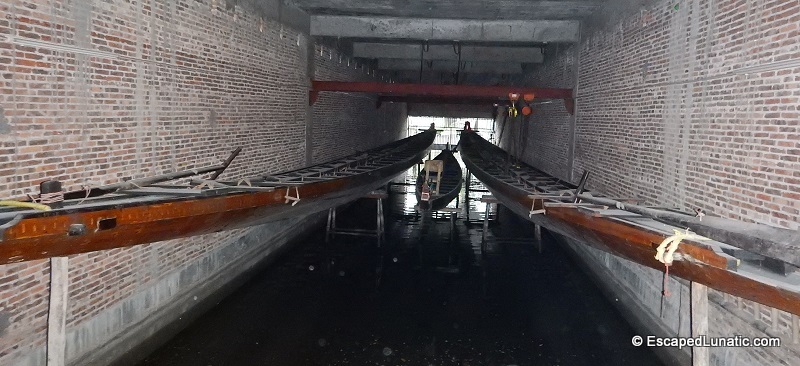
Three of my sector’s dragon boats asleep in their lair
I love the boats. I love the practice sessions. I love the dragon boat races. I have to confess that there’s one tiny aspect to Dragon Boat Festival I don’t love. That’s the traditional food, zongzi. It’s made from glutinous sticky rice, often with meat or other additions. Everything is then wrapped up in bamboo leaves and boiled for many hours. You can reheat frozen ones by steaming them. Somehow, it just doesn’t work for me. My lovely wife enjoys zongzi. I managed to get some pics while my wife and one of her sisters were making a large batch of them.
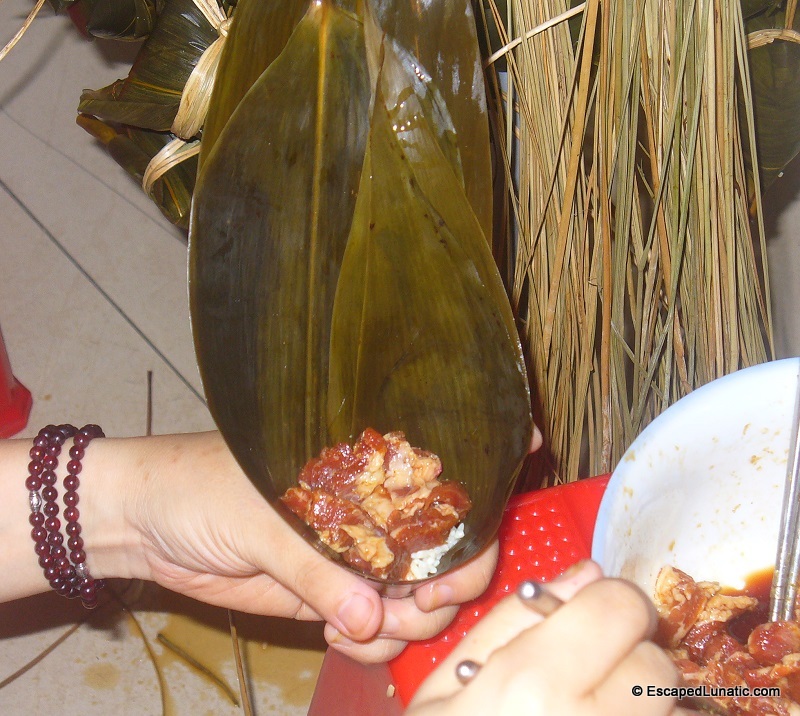
Zongzi being assembled
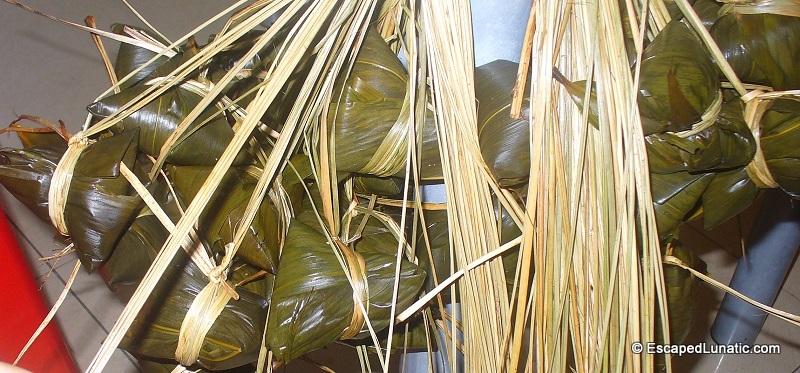
Fully assembled zongzi ready to be steamed
Now I’m just waiting for word from the village committee on when it’s time to awaken the sleeping dragons.
